



Clinical guide · Paediatric and preventive
Silver diamine fluoride in practice: indications, the 38% protocol, staining consent and pairing with fluoride varnish
In this article8
In short
Silver diamine fluoride at 38% arrests active carious lesions without drilling or anaesthesia, which makes it the first option for young or uncooperative children, for patients with many lesions, and for root caries in older adults. The arrested lesion turns permanently black, so written consent is required before the first drop. Give the second application one to four months after the first rather than six, then review at each recall; fluoride varnish covers the rest of the mouth.
- Silver diamine fluoride is about 24 to 27% silver, 5 to 6% fluoride and 7.5 to 11% ammonia by weight in the 38% products; the silver is antibacterial and the fluoride remineralises.
- Systematic reviews report high caries-arrest rates in primary teeth with 38% SDF, higher than with fluoride varnish, and the 38% concentration outperforms lower ones.
- Arrested lesions stain black permanently on the lesion; on primary teeth the stain lasts until the tooth is lost, on permanent teeth it persists unless the lesion is restored.
- Professional guidance most often cites six-month re-application, but in a 2024 randomised trial two applications one or four months apart arrested 98% and 96% of lesions, against 72% when six months apart.
- Potassium iodide applied immediately after SDF reduces the staining but may reduce the arrest effect; it is an option, not a standard step.
More key facts+3
The problem: six cavities and no cooperation
A three-year-old with multiple carious primary molars, a parent who cannot commit to a hospital general anaesthetic, and a child who will not open for a handpiece. Or an eighty-year-old with root caries on every remaining tooth and a heart that makes long appointments unwise. Silver diamine fluoride was made for these patients: a drop of liquid, no drilling, no injection, and an active lesion that stops progressing. The price is a black stain that must be explained before, not after. This guide covers the indications, the protocol, the consent conversation, and how SDF pairs with varnish, sealants and crowns in our catalogue.
Understand: what SDF does
Silver diamine fluoride is a clear, alkaline solution of silver, fluoride and ammonia. On a carious lesion the silver ions kill the bacteria in the biofilm and the dentine and precipitate as silver phosphate and silver protein complexes; the fluoride forms fluorapatite and hardens the remaining dentine; the ammonia keeps the solution stable. The lesion stops, hardens, and turns black where the silver has precipitated in the demineralised tissue. Sound enamel does not stain because there is nothing for the silver to bind to.
What the evidence says
- Evidence. A systematic review of paediatric trials found 38% silver diamine fluoride effective at arresting caries in primary teeth, with the 38% concentration outperforming lower concentrations and arrest rates above those of fluoride varnish.1
- Guideline. Professional bodies describe SDF as an option for children who are very young, anxious or have special needs, and in general recommend re-application at intervals; six months is the most cited interval, with some protocols applying a second dose within the first weeks for active lesions.2, 3
- Evidence. In a 2024 randomised trial of 84 children with 505 lesions, two applications of 38% SDF with fluoride varnish given one month or four months apart arrested 98% and 96% of lesions, against 72% when given six months apart; the authors note the groups differed in lesion numbers and follow-up length.5
- Evidence. The main adverse effect in trials is the permanent black staining of the arrested lesion; transient gingival irritation is reported where the solution touches soft tissue.1
- Practice. Written informed consent that names the staining is treated as mandatory in every protocol we reviewed.
Key numbers, labelled
- Manufacturer. The stocked products are 38% silver diamine fluoride; one drop treats several surfaces, and the bottle is used with a micro applicator, not a syringe.4
- Manufacturer. Application time is short, commonly about one minute of contact, followed by air drying and a period without rinsing or eating per the instructions.4
- Practice. Clinicians give the second application within one to four months, then re-assess at each recall and re-apply to any lesion that is not hard and black, and cover arrested lesions with glass ionomer or a crown when aesthetics or function require it.
Indications and contraindications
| Use SDF for | Do not use SDF for |
|---|---|
| Active cavitated lesions in primary teeth of children who cannot tolerate conventional treatment | Lesions with signs of pulpal involvement: spontaneous pain, swelling, sinus, abscess, or a radiolucency |
| Stabilising many lesions before staged restorative treatment | Patients with a known silver allergy |
| Root caries in older or medically compromised adults | Patients or parents who decline the staining after a clear explanation |
| Hypersensitive teeth and exposed root surfaces | Ulcerated or inflamed soft tissue near the lesion |
| Lesions under a planned stainless steel crown or glass ionomer restoration | Anterior lesions in a patient for whom the stain is unacceptable and restoration is possible |
The protocol
- Diagnose and photograph. Confirm the lesion is active and the pulp is symptom-free. Take a photograph for the record and for the consent discussion.
- Consent. Explain the staining with a picture, say it is permanent on the lesion, say sound enamel does not stain, offer the alternatives. Written consent, signed, in the record with the tooth numbers.
- Protect. Petroleum jelly on the gingiva and lips; safety glasses on the patient and the operator; a bib and gloves, because SDF stains skin, clothes and worktops.
- Prepare. Cotton-roll isolation, remove gross debris with a brush or a spoon without deliberate excavation, dry the lesion with air.
- Apply. One drop in a dappen dish. A super-fine micro applicator, bent to reach, saturated and blotted so it does not drip. Apply to the lesion only for the manufacturer's contact time.
- Dry and wait. Gentle air; keep saliva off for the stated time; no rinsing, eating or drinking for the period in the instructions.
- Optional potassium iodide. Reduces the stain when applied immediately; may reduce arrest. Decide per case, and say so in the consent.
- Record. Teeth, surfaces, product, batch, consent, and the review date.
- Second application at one to four months, then review at each recall. Arrested lesions are hard, black and shiny; re-apply to anything soft or brown. Plan glass ionomer coverage or a crown where needed.
Options: SDF and the materials around it
| Class | Stocked examples | Role |
|---|---|---|
| Silver diamine fluoride 38% | Advantage Arrest (Elevate Oral Care), Med Protect SDF 38% | Arresting active lesions |
| Sodium fluoride varnish 5% | CharmVarnish, NovaBright, Enamelast, FluoriMax 2.5% | Prevention on the rest of the dentition at the same visit |
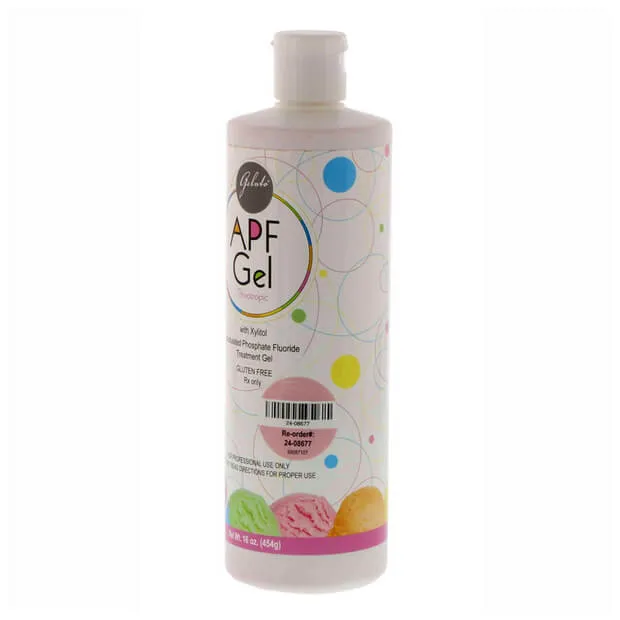
| APF gel and trays | Gelato APF gel, fluoride trays | Professional fluoride application in older children and adults |
| Micro applicators | Bendable disposable micro applicators, super fine | Precise placement of a small volume |
| Glass ionomer and stainless steel crowns | Glass ionomer restoratives; primary molar crowns by tooth code | Covering arrested lesions where aesthetics or function need it |
Shop the categories in this guide
Compare: SDF, varnish and sealant by indication
| Indication | SDF 38% | Fluoride varnish 5% | Sealant |
|---|---|---|---|
| Active cavitated lesion, primary tooth | First choice for arrest | Prevention only; weaker arrest | No |
| Non-cavitated early lesion | Option where staining is acceptable | Yes, with diet advice | Yes on occlusal fissures |
| Caries prevention, high-risk child | No (nothing to arrest) | Yes, at each recall | Yes on erupted molars |
| Root caries, older adult | Yes | Yes as adjunct | No |
| Hypersensitivity | Yes | Yes | No |
| Aesthetic zone, restoration possible | Usually no | Adjunct | Not applicable |
Recommended products
Silver diamine fluoride and the applicators that place it:
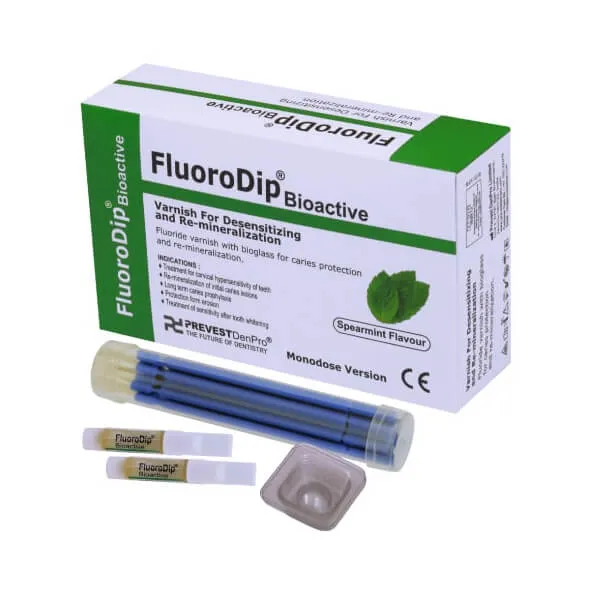
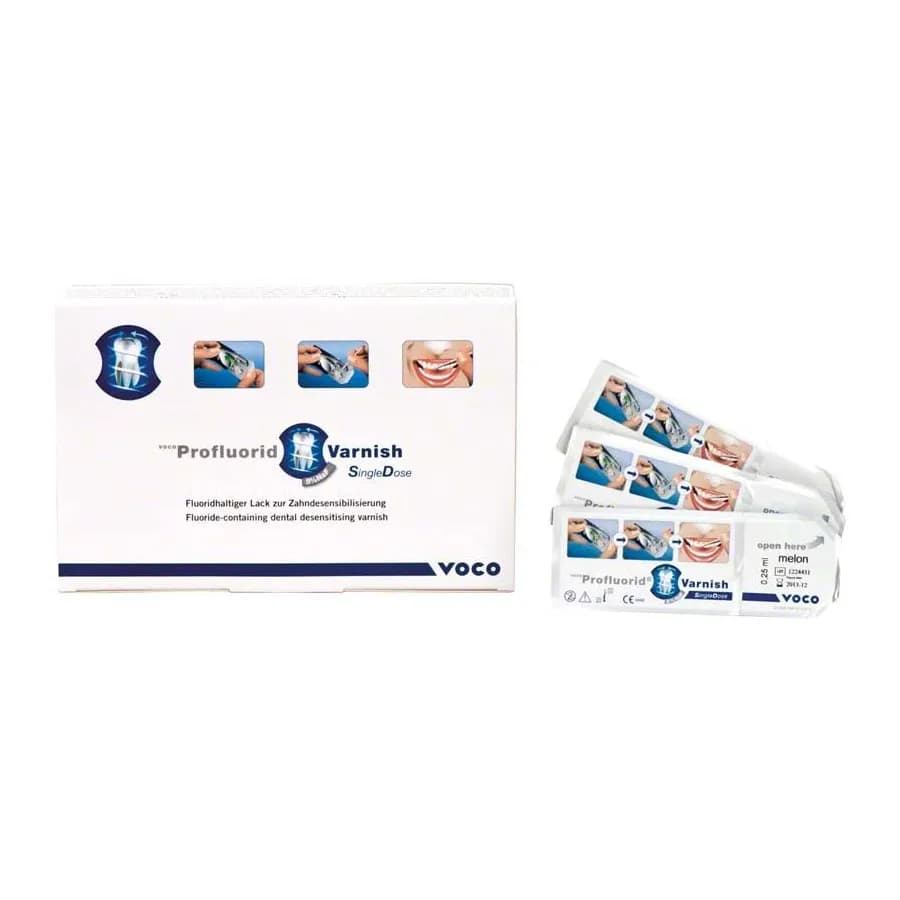
Fluoride varnishes for the rest of the mouth at the same visit:
Buying advice
One 5 ml bottle of 38% SDF treats a large number of lesions; buy it with a box of super-fine micro applicators and a fluoride varnish in single doses so the prevention half of the visit is as quick as the arrest half. Write the consent form before the first patient, not after.
Frequently asked questions
Which patients is SDF for?
Children too young or too anxious for conventional treatment, patients with many active lesions who need them stabilised before restorative work, medically compromised or frail adults, root caries in older patients, and hypersensitive teeth. It is not a substitute for restoring a tooth that can be restored when aesthetics or function require it.
Does the tooth have to be dry?
As dry as practical. Isolate with cotton rolls, remove gross debris without excavating, dry the lesion, apply SDF with a micro applicator for the manufacturer's stated time (commonly about one minute), and keep saliva off the surface while it dries. A rubber dam is helpful in cooperative patients but not required; use a non-latex dam if the patient has a latex allergy.
How do I explain the black stain?
Show a photograph before treatment, say clearly that every arrested lesion will turn black and stay black, that healthy enamel does not stain, and that the alternative is a filling or extraction. Get written consent from the parent or patient, and keep it in the record with the teeth treated.
Can SDF be used under a filling or a crown?
Yes. Arrested dentine can be covered with glass ionomer (the SMART technique) or the tooth can receive a stainless steel crown later; the stain is then hidden. Bonding composite to SDF-treated dentine is less predictable and manufacturers' guidance should be followed.
Sources
- Silver diamine fluoride in paediatric dentistry: effectiveness in preventing and arresting dental caries, systematic reviewEvidence
- Silver diamine fluoride: frequently asked questions for families, American Academy of PediatricsGuideline
- The use of silver diamine fluoride in a children's hospital: critical analysis and action protocolGuideline
- Advantage Arrest 38% silver diamine fluoride, Elevate Oral Care instructions for useManufacturer
- An open-label, parallel-group, randomized clinical trial of different silver diamine fluoride application intervals to arrest dental caries, BMC Oral Health 2024Evidence